
TL;DR:
- Labor violations such as wage theft, safety issues, and retaliation are common in San Jose manufacturing.
- Reporting violations involves documenting incidents, identifying the correct agency, and filing formal complaints promptly.
- Financial settlements are the typical resolution, with job reinstatement being rare in labor disputes.
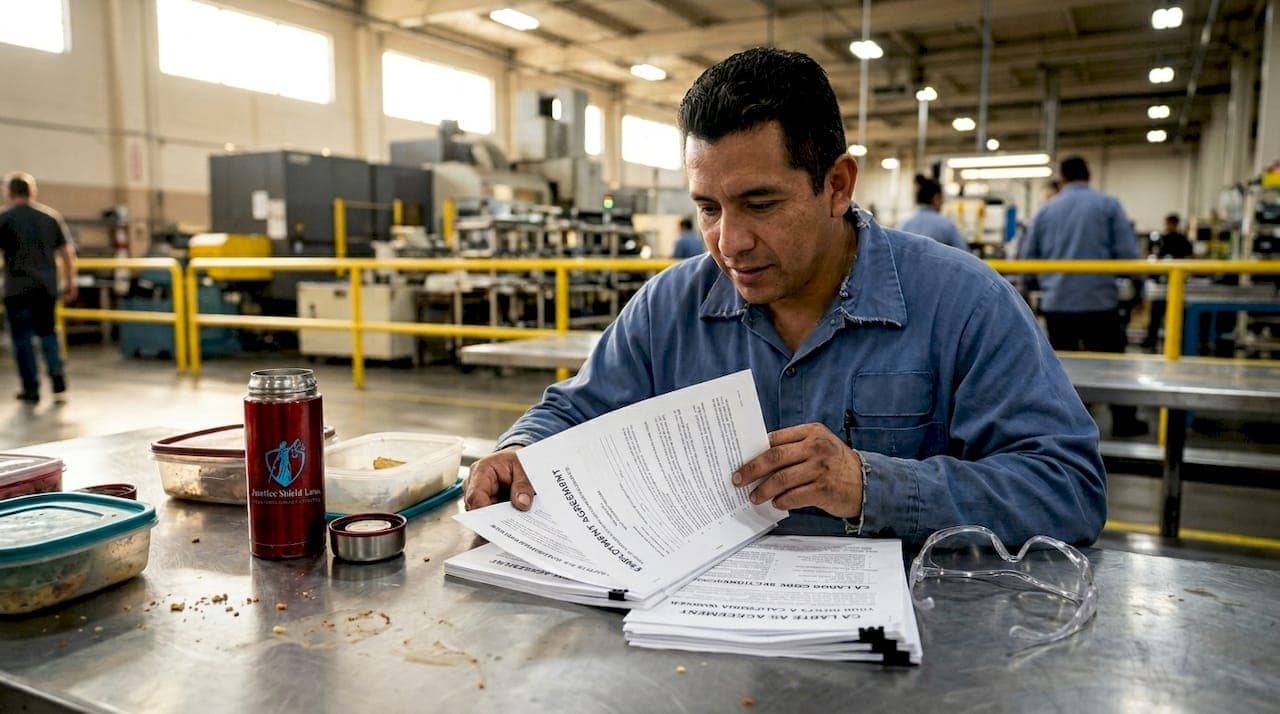
Most manufacturing workers in San Jose assume that if they just show up and do their job, they are protected. The reality is more complicated. Labor violations in manufacturing plants are more common than many employees realize, and the window to act on them is often shorter than expected. From wage theft on the shop floor to unsafe machinery and retaliation for union organizing, the stakes are high. This guide walks you through the most common disputes, real local examples, and practical steps you can take right now to protect your livelihood and legal rights.
Table of Contents
- Understanding labor disputes in San Jose manufacturing jobs
- Types of labor violations and your rights
- How to take action: Reporting and resolving violations
- Challenges and edge cases: What most workers miss
- What most legal guides leave out about San Jose labor disputes
- How Justice Shield Law can support your rights
- Frequently asked questions
Key Takeaways
| Point | Details |
|---|---|
| Understand common disputes | Most manufacturing labor problems involve unsafe work, unpaid wages, or retaliation. |
| Know your enforcement options | Different labor violations require contacting the right agency like Cal/OSHA, DLSE, or NLRB. |
| Document incidents early | Keep detailed records because evidence is critical for your case. |
| Expect settlements, not always rehiring | Most cases result in money compensation instead of job reinstatement. |
| Get support from experts | Legal help and collective action can greatly improve your chances of success. |
Understanding labor disputes in San Jose manufacturing jobs
A labor dispute is any conflict between an employer and employees over workplace conditions, pay, safety, or the right to organize. In San Jose manufacturing specifically, these conflicts tend to cluster around a handful of recurring issues.
Common triggers in San Jose manufacturing plants:
- Unpaid overtime or minimum wage violations (wage theft)
- Unsafe machinery, missing guards, or inadequate safety training
- Retaliation after employees raise concerns or attempt to unionize
- Discriminatory discipline or termination based on protected characteristics
- Mass layoffs without proper notice under state or federal law
Here is a snapshot of how these disputes break down by type and what workers should know about each:
| Dispute type | Key trigger | Relevant agency |
|---|---|---|
| Wage theft | Unpaid wages, denied breaks | DLSE / Labor Commissioner |
| Safety violation | Hazardous equipment, no guards | Cal/OSHA |
| Union retaliation | Firing organizers, intimidation | NLRB |
| Discrimination | Race, gender, disability bias | DFEH / EEOC |
| Mass layoff | No WARN Act notice | California Labor Commissioner |
One important misconception is that every layoff or disciplinary action is automatically illegal. That is not true. Employers have the legal right to make business decisions. The line is crossed when those decisions violate wage laws, ignore safety regulations, or punish workers for protected activities.
A high-profile local example shows how quickly things can escalate. Premier Recycle settled with drivers after NLRB intervention during a unionization effort in East San Jose. The case demonstrated that even smaller companies are not immune to regulatory scrutiny when workers organize and complaints are filed properly.
The impact of a labor dispute goes beyond your immediate paycheck. Unresolved violations can affect your career, your health, and your coworkers. Acting early and informed is always your best position.
Types of labor violations and your rights
Not every workplace problem rises to the level of a legal violation. But several categories consistently show up in San Jose manufacturing cases, and knowing which applies to your situation matters.
Six main categories of labor violations:
- Wage theft: Includes unpaid overtime, off-the-clock work, and meal break violations.
- Unsafe working conditions: Missing machine guards, lack of PPE, or inadequate training.
- Union-busting: Threatening or firing employees for organizing activity.
- Retaliation: Demoting or terminating workers who file complaints.
- Discrimination: Unequal treatment based on race, gender, age, or disability.
- Wrongful termination during mass layoffs: Failing to give proper WARN Act notice.
Local cases make these categories concrete. All FAB Precision Sheetmetal received over $200,000 in fines for repeat machine-guarding failures that led to worker amputations. This is not a fringe case. Repeat violations show that some employers are aware of the problem and choose not to fix it.
For wage and retaliation claims, the DLSE enforces wage claims and labor violations in California manufacturing, giving workers a formal channel to file complaints without hiring an attorney first.

If you believe your rights to organize are being suppressed, that falls under the National Labor Relations Board (NLRB). Safety violations go to Cal/OSHA. Discrimination claims go to the California Civil Rights Department or the EEOC at the federal level.
Understanding warehouse safety violations and reporting workplace discrimination are areas where workers often need more guidance than they realize.
Important: Many settlements resolve with financial compensation, not job reinstatement. Know your goal before filing.
Pro Tip: Keep a personal log of every incident, with dates, times, names, and what was said or done. Even informal records can significantly strengthen a formal complaint.
How to take action: Reporting and resolving violations
Knowing you have been wronged is one thing. Taking the right steps in the right order is what actually leads to results.
Step-by-step process for reporting a labor violation:
- Document everything immediately. Write down dates, conversations, and any witnesses. Save emails, text messages, and pay stubs.
- Identify the correct agency. Match your violation type to the right agency (NLRB, Cal/OSHA, DLSE) using the table in the previous section.
- File a formal complaint. Each agency has an online or in-person intake process. Filing officially starts the clock on your employer's obligation to respond.
- Cooperate with the investigation. Provide all documentation and be consistent in your account of events.
- Consider legal representation. An employment attorney can guide settlement negotiations or escalate to litigation if needed.
- Understand the resolution process. Most cases move through intake, investigation, and then mediation or settlement before any lawsuit is filed.
The California Labor Commissioner's Office enforces labor violation claims and retaliation across manufacturing industries. Filing with them is often the fastest path to recovering unpaid wages.
California has recovered millions of dollars in wage theft enforcement actions on behalf of workers across industries. That number reflects real employees who filed complaints, documented their cases, and followed through.
Pro Tip: Statutes of limitations are real. For most wage claims in California, you have three years. For some retaliation claims, it can be as short as one year. Don't wait.
For a broader view of your protections, reviewing employment law protections for California workers gives important context. If your situation involves a layoff, understanding your wrongful termination rights is equally important.
Challenges and edge cases: What most workers miss
Following the correct procedures does not guarantee a smooth process. Several factors can complicate even strong cases, and knowing them ahead of time helps you prepare.
Warning signs that your case may be more complex than typical:
- Your employer has a history of repeat violations with regulators
- The company has retained outside consultants specifically to manage union activity
- You were laid off alongside a large group with little advance notice
- Your complaints were ignored or dismissed internally before you escalated
- Key witnesses are reluctant to speak up for fear of their own jobs
Repeat violations raise penalties sharply. Cal/OSHA fines escalate for repeat violations, jumping from roughly $43,000 to over $212,000, and employers with records of non-compliance face heightened regulatory scrutiny. For workers, this is actually useful information. A documented history of violations strengthens your complaint and signals the agency that the employer is a priority target.
Mass layoffs add another layer of complexity. Mass layoffs at Lumileds, with WARN Act triggers, rarely turn into disputes unless specific legal requirements are breached. If you received no advance notice before a mass layoff, that is the key question to examine.
Statistic: California workers recovered over $6 million through labor enforcement actions in 2026, according to statewide enforcement data. Individual claims, when properly filed, contribute to that total.
Employers also use delay tactics. They may claim a slow season caused your layoff, bring in consultants to argue against union representation, or simply slow-walk the internal grievance process. Recognizing these strategies early and moving your complaint to an outside agency is often the right response.
If you suspect workplace retaliation is at play, documenting any changes in your schedule, duties, or treatment immediately after you raised concerns is critical.
What most legal guides leave out about San Jose labor disputes
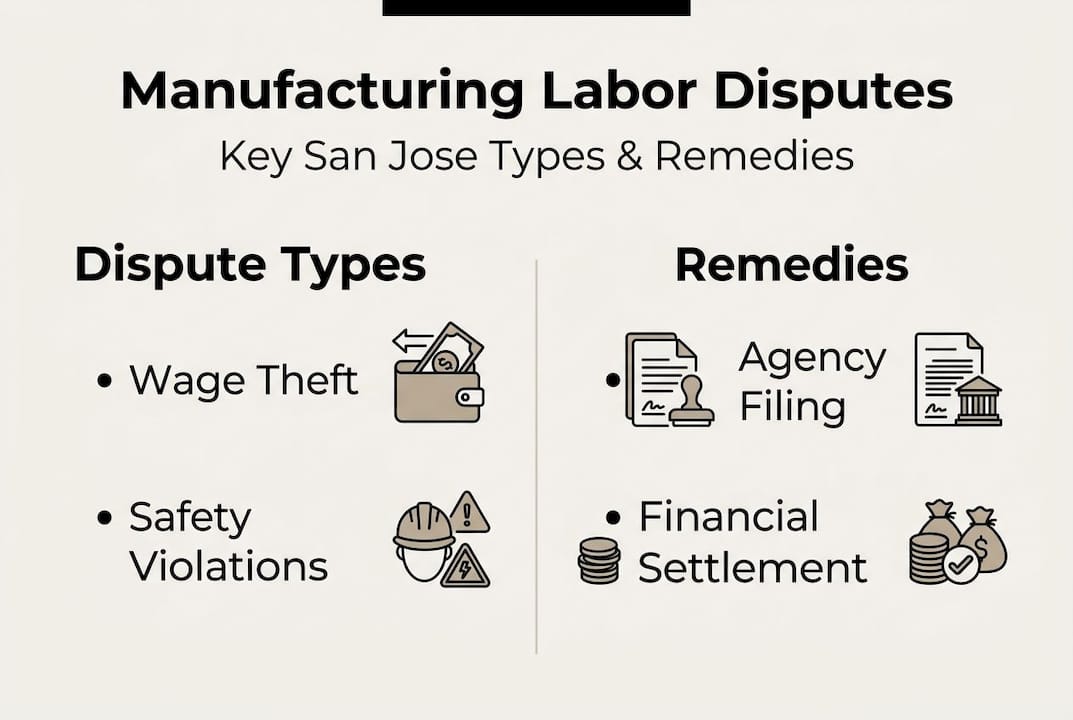
Here is the part that most articles skip: winning a labor dispute in San Jose manufacturing usually does not mean getting your job back. It means getting paid. That is not cynicism. It is the pattern we see repeatedly in local case outcomes.
Financial settlements are the norm. Reinstatement is rare, especially in larger manufacturing environments where relationships have already broken down. Knowing this going in changes how you approach your case. Your goal should be maximum financial recovery and documented vindication, not restoring a working relationship that may already be broken.
Employer resistance is also predictable. Companies that have faced prior complaints often have legal teams or consultants ready to respond. The workers who fare best are those who get legal advice early, understand their wage rights specifically, and do not try to negotiate directly without support.
Collective action matters more than most individual workers realize. Cases with co-worker participation tend to move faster and settle higher. If others in your workplace share your experience, organizing a joint complaint is almost always more effective than going it alone. Act fast, document thoroughly, and do not wait for someone else to go first.
How Justice Shield Law can support your rights
If you are a manufacturing employee in San Jose dealing with wage theft, unsafe conditions, retaliation, or an unlawful layoff, you do not have to navigate this process alone. The Justice Shield Law employment attorneys focus exclusively on representing employees, never employers. That focus matters when you need someone firmly in your corner.
We help you identify the right agency, meet critical deadlines, build a strong documentation record, and negotiate settlements that reflect the full extent of your losses. Our team offers free consultations, so you can understand your options before committing to anything. For a deeper look at your protections under state law, our California employment law guide is a strong place to start. Reach out today.
Frequently asked questions
What is the most common labor dispute in San Jose manufacturing?
Wage theft, unsafe working conditions, and retaliation for union organizing are the most common labor disputes. Premier Recycle settled with drivers after alleged union retaliation and wage issues, making it one of the most visible recent local examples.
Where should I report unsafe working conditions?
Unsafe work conditions in manufacturing should be reported to Cal/OSHA for prompt investigation. Cal/OSHA fined All FAB Precision Sheetmetal over $212,000 for repeat safety violations that caused serious injuries.
What compensation can I expect after a labor dispute?
Many labor dispute cases end in financial settlements, though reinstatement is rare. Settlements in San Jose labor disputes often favor financial compensation over job reinstatement, so setting realistic expectations early helps you plan.
Can group action help with manufacturing labor claims?
Yes, collective action by workers, such as through a union, can strengthen cases and improve outcomes. Unions are active in San Jose and provide vital support for manufacturing workers facing disputes, often accelerating agency response times.
Recommended
- Chevron wage dispute rights: Bakersfield workers' guide | Justice Shield Law
- Justice Shield Law | California Employment Lawyers — Free Consultation
- Justice Shield Law | California Employment Lawyers — Free Consultation
- Justice Shield Law | California Employment Lawyers — Free Consultation
- Your Rights Against Language Discrimination In Garden Grove Manufacturing | Serendib Law Firm