
TL;DR:
- Wrongful termination in Riverside involves firing for legal violations like discrimination or retaliation.
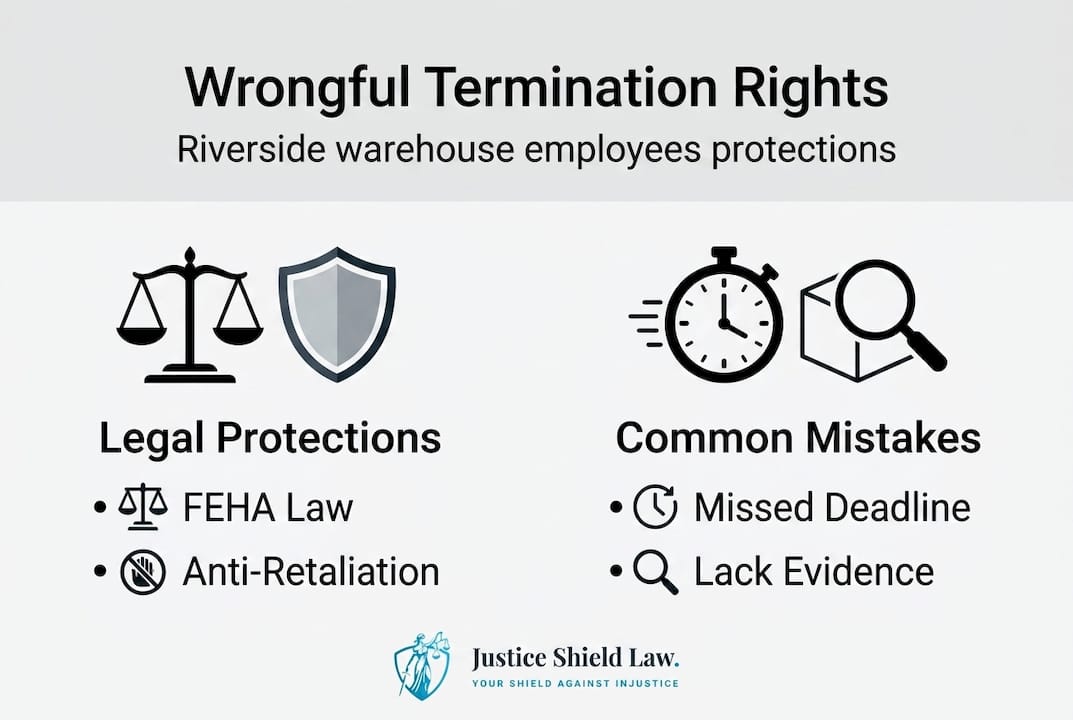
- California law offers strong protections, including reporting unsafe conditions and wage theft.
- Act promptly by documenting details, consulting a lawyer, and filing complaints within deadlines.
Losing your job in a Riverside warehouse can feel overwhelming, especially when you suspect the firing was unjust. Many warehouse workers believe that California's at-will employment rules mean employers can fire anyone for any reason, leaving employees with little to no recourse. That belief is not entirely accurate. Significant legal protections exist for workers who are dismissed unlawfully, and knowing those protections can change everything about your situation. This guide walks you through what wrongful termination actually means, how California law shields you, and what practical steps you can take right now to protect your future.
Table of Contents
- What counts as wrongful termination in Riverside warehouses?
- How California labor laws protect Riverside warehouse workers
- Recognizing signs of unlawful dismissal in the warehouse
- Taking action: How Riverside warehouse employees can respond
- Why most warehouse employees underestimate their legal leverage after termination
- Get experienced legal support for wrongful terminations
- Frequently asked questions
Key Takeaways
| Point | Details |
|---|---|
| Wrongful termination definitions | Warehouse workers in Riverside are protected from unfair dismissal for discriminatory or retaliatory reasons. |
| Legal protections explained | California labor laws provide strong safeguards for warehouse employees against wrongful firing. |
| Actionable steps | Immediate documentation and consultation with a labor attorney increase chances of justice. |
| Warning signs | Look for sudden negative reviews, policy inconsistencies, or punishments after speaking up about workplace issues. |
| Accessible support | Expert legal help is available for Riverside warehouse workers facing wrongful termination. |
What counts as wrongful termination in Riverside warehouses?
Wrongful termination does not simply mean losing a job you believe you deserved to keep. Legally, it refers to a firing that violates a specific law, a contract, or public policy. Understanding the difference between a lawful dismissal and an illegal one is the foundation of any claim you might have.
California follows at-will employment rules, meaning most employers can end a working relationship at any time, for almost any reason. The critical word is "almost." Employers cannot fire you for reasons that violate state or federal law. California labor protections make it explicitly illegal to terminate an employee based on discrimination, retaliation, or violations of statutory rights. That legal framework applies to every Riverside warehouse worker, whether you work at a distribution center, a cold storage facility, or a shipping hub.
Common illegal reasons for firing a warehouse worker include:
- Race, gender, age, national origin, disability, or religion (protected characteristics under the Fair Employment and Housing Act, known as FEHA)
- Complaining about unsafe working conditions or filing an OSHA report
- Reporting wage theft or unpaid overtime to supervisors or labor agencies
- Taking legally protected leave, such as medical or family leave
- Whistleblowing on your employer's illegal activity
- Participating in a union organizing effort or protected concerted activity
Warehouse-specific situations matter here. Suppose you told your supervisor that the loading dock lacked required safety equipment, and two weeks later you were let go with a vague reason like "restructuring." That timing and context can be enough to trigger a legal investigation. Similarly, if you and several coworkers asked about unpaid meal break premiums and only you were fired, that selective treatment may signal retaliation.
| Type of termination | Likely legal status |
|---|---|
| Fired after raising safety concerns | Potentially unlawful retaliation |
| Laid off due to documented budget cuts | Generally lawful |
| Fired after filing a wage complaint | Potentially unlawful retaliation |
| Dismissed after a verifiable policy violation | Generally lawful |
| Fired shortly after requesting FMLA leave | Potentially unlawful |
| Let go after reporting workplace harassment | Potentially unlawful retaliation |
Pro Tip: Write down every detail you remember about the days leading up to your termination. Include dates, who said what, and any documentation you received. This personal record becomes valuable evidence before you ever speak to an attorney.
How California labor laws protect Riverside warehouse workers
With an understanding of what is considered wrongful termination, it is crucial to know how statewide laws specifically protect Riverside workers. California has some of the strongest employee protections in the country, and reporting workplace discrimination is one of the most legally supported actions any worker can take.
The Fair Employment and Housing Act (FEHA) is California's primary anti-discrimination statute. It applies to employers with five or more employees and prohibits termination based on any protected characteristic. California's Labor Code also contains multiple whistleblower provisions that protect workers who report safety violations, fraud, or other unlawful conduct. These are not optional guidelines for employers. They carry real penalties, including back pay, lost benefits, emotional distress damages, and even punitive damages in severe cases.
California also has strong anti-retaliation laws, and retaliation claims have become one of the most common types of wrongful termination lawsuits filed statewide. Retaliation occurs when an employer punishes you for doing something the law protects, such as filing a workers' compensation claim, reporting a labor code violation, or cooperating with a government investigation.
Key California laws protecting Riverside warehouse employees:
| Law or statute | What it covers |
|---|---|
| FEHA | Discrimination based on protected characteristics |
| Labor Code Section 1102.5 | Whistleblower protections for reporting violations |
| Labor Code Section 6310 | Protection for reporting workplace safety concerns |
| CFRA (California Family Rights Act) | Retaliation for taking family or medical leave |
| Industrial Welfare Commission Orders | Meal breaks, rest breaks, and overtime rules |
If you believe you were wrongfully terminated, here is a general road map for pursuing legal recourse:
- Gather your documentation immediately. Collect pay stubs, termination letters, emails, and any performance reviews you have on file.
- File a complaint with the California Civil Rights Department (formerly the DFEH) if discrimination or harassment was involved. There are strict deadlines, typically three years from the date of the violation.
- File a complaint with the Labor Commissioner's Office for wage-related retaliation claims. This agency handles unpaid wages and retaliation related to wage disputes.
- Consult an employment attorney to evaluate your specific case. Many attorneys, including those at Justice Shield Law, offer free initial consultations.
- Preserve all communications and stop using any employer-owned devices or accounts to avoid complications.
California's extensive worker statutes mean you likely have more legal options than you realize. Don't assume your situation doesn't qualify without first speaking to a professional.
Recognizing signs of unlawful dismissal in the warehouse
Understanding the laws is only half the battle. Recognizing red flags in your own situation is just as important. Many warehouse employees don't realize they have a case because the warning signs of wrongful termination are often subtle and layered over legitimate-sounding justifications.
One of the most common patterns is the sudden shift in how a supervisor treats you. If your performance was consistently rated as acceptable or good, and then suddenly you start receiving critical reviews or disciplinary write-ups shortly after a protected activity (like filing a safety complaint or asking about overtime pay), that shift in treatment is a warning sign worth noting.
Red flags that may signal unlawful dismissal:
- A termination that happens within days or weeks of a protected activity
- Inconsistent enforcement of company policies, where you are disciplined but coworkers doing the same thing are not
- Vague termination reasons like "not a good fit" or "we're going in a different direction" with no documented performance issues
- Supervisors or managers making comments related to your age, disability, ethnicity, or gender before your firing
- Being denied access to HR grievance procedures or told not to file a complaint
- Retaliation disguised as a "mutual agreement" to resign under pressure
Warehouse safety rights are particularly important to understand. Employees who report dangerous conditions or wage violations are legally shielded from employer punishment. If you raised concerns about a broken forklift, extreme heat in a storage area, or skipped safety training, and then lost your job, the law likely protects you.
Knowing the difference between lawful and unlawful dismissal requires looking at the full context. A genuine policy violation, like repeated unexplained absences, can be a lawful reason to fire someone. But if that same policy is selectively applied to you after you filed a complaint, the employer's true motive comes into question.
Know your rights: In California, employees who complain about workplace safety, report unpaid wages, or engage in other legally protected activities cannot lawfully be fired for doing so. If your termination appears connected to any of these activities, you may have a strong legal claim worth pursuing.
Collect as much evidence as you can. Save emails, take screenshots of relevant messages (on personal devices only), request copies of your personnel file under California Labor Code Section 1198.5, and identify coworkers who witnessed relevant events and might be willing to provide statements.
Taking action: How Riverside warehouse employees can respond
Once you spot the warning signs of wrongful termination, it is time to act. Here is how the process unfolds step by step.
Many workers wait too long after a wrongful firing because they feel unsure about the process or fear the cost of legal help. Acting quickly is critical. Statutes of limitations (legal deadlines) apply to all employment claims, and missing them can permanently bar you from recovering any compensation. If your termination involved a wage dispute, reviewing a wage dispute guide can help you understand what additional protections may apply to your situation.
Steps to take after a potentially wrongful termination:
- Write a detailed account of what happened. Include every conversation, meeting, and workplace event leading up to your termination. Date everything.
- Request your personnel file. California law gives you the right to review your employment records within 30 days of a written request.
- Preserve all communications. Forward any work-related emails to a personal account before your access is cut off, or take screenshots on your personal phone.
- Identify and reach out to witnesses. Think about coworkers who saw relevant incidents or heard problematic comments. Their accounts can be powerful evidence.
- File a formal internal complaint with your employer's HR department in writing if you haven't already. This creates a paper trail.
- Contact a government agency such as the California Civil Rights Department or the Labor Commissioner's Office, depending on the nature of your claim.
- Schedule a consultation with an employment lawyer. Workers can consult employment lawyers to get a professional assessment of their case and understand the full range of available remedies.
Being strategic with your timeline matters enormously. Filing deadlines vary based on the type of claim. Discrimination claims generally need to be filed with the California Civil Rights Department within three years of the alleged violation. Wage retaliation claims may have shorter windows. An experienced attorney can review your specific facts and tell you exactly where you stand before any deadline passes.
Pro Tip: Do not post anything about your termination on social media. Employers and their legal teams routinely search social profiles for statements that can be used to undermine a legal claim. Keep your case private until you've spoken with an attorney.
Why most warehouse employees underestimate their legal leverage after termination
The single biggest mistake we see warehouse workers make is assuming that because California is an at-will state, they have no power after a firing. That assumption costs people real money and real justice. The at-will doctrine is riddled with exceptions, and in California, those exceptions are broad, well-enforced, and meaningful.
Workers who understand UPS Riverside wrongful termination cases and similar situations often discover that their circumstances closely mirror legally actionable claims that resulted in significant settlements. The pattern repeats: an employee files a complaint, gets fired shortly after with a thin justification, assumes they have no options, and walks away from a valid claim.
Warehouse environments specifically tend to have cultures where workers feel replaceable and powerless. Employers sometimes count on that feeling. The reality is that California law is designed to check that power imbalance. You have the right to report unsafe conditions. You have the right to ask about your pay. You have the right to take protected leave. And you have the right to keep your job when you exercise those rights. Every Riverside warehouse worker deserves to know that their silence is a choice, not a requirement.
Get experienced legal support for wrongful terminations
If you believe your firing was unlawful, you don't have to face the situation alone. Justice Shield Law works exclusively on the employee side of employment law, meaning every attorney on our team is focused solely on defending your rights, not the employer's interests. We offer free consultations to help Riverside warehouse workers understand whether their case has merit and what outcomes are realistically possible. Whether your situation involves discrimination, retaliation, wage disputes, or safety violations, we are ready to review your facts and advise you on your next steps. Visit our site to connect with a Riverside labor attorney who can help, or explore our wage dispute support resources for additional guidance.
Frequently asked questions
What qualifies as wrongful termination for Riverside warehouse employees?
Wrongful termination occurs when you're fired for discriminatory reasons, retaliation, or violations of your labor rights. California's labor laws protect warehouse employees from termination based on discrimination or retaliation, even in at-will employment situations.
Can I get my job back after wrongful termination?
While some cases may result in job reinstatement, most outcomes involve compensation or a negotiated settlement rather than returning to the same workplace.
How quickly should I take action if I think I was fired unfairly?
Act as soon as possible. Document everything immediately and consult an employment lawyer quickly, because timely action is essential to preserve your legal options and meet filing deadlines.
What kind of evidence is helpful in a wrongful termination case?
Document emails, performance reviews, HR reports, and any witness statements connected to your termination. A clear timeline of events before and after your firing is also critical.
Are all Riverside warehouse workers protected, even part-time or temporary staff?
Yes. California labor laws protect all employees, including part-time and temporary workers, when a termination violates their legal rights regardless of employment classification.