

TL;DR:
- Workplace retaliation in California includes demotions, pay cuts, reassignments, and terminations following protected activities.
- Employees can file claims with the DLSE by gathering evidence, submitting forms, and cooperating with investigations.
- Legal support and prompt action improve chances of securing reinstatement, back pay, and penalties.
Many employees in San Bernardino County assume that filing a retaliation claim with the California Labor Commissioner is too complicated, too slow, or simply not worth the effort. That assumption can cost you real money and real rights. Workplace retaliation is illegal under California law, and the Division of Labor Standards Enforcement (DLSE) exists precisely to investigate these cases and hold employers accountable. Whether you were fired after reporting a wage violation or had your hours cut after a safety complaint, this guide walks you through every step, from understanding what counts as retaliation to knowing what outcomes you can realistically expect.
Table of Contents
- What counts as workplace retaliation in California
- Overview of the filing process with the CA Labor Commissioner
- What happens during a DLSE retaliation investigation
- Getting support for your retaliation case
- The truth about retaliation claims in San Bernardino County
- How Justice Shield Law supports San Bernardino retaliation cases
- Frequently asked questions
Key Takeaways
| Point | Details |
|---|---|
| Understand retaliation | Retaliation includes any negative action after you exercise your workplace rights. |
| Know the filing steps | Filing with the DLSE involves simple but specific steps you can follow. |
| Investigation outcomes vary | Remedies can include back pay, reinstatement, and penalties up to $10,000 per violation. |
| Support makes a difference | Legal guidance and advocacy strengthen your chances of a successful claim. |
What counts as workplace retaliation in California
Retaliation happens when an employer takes a negative action against you because you exercised a legal right. That sounds simple, but the range of behaviors that qualify is broader than most employees realize. Under California law, retaliation is not limited to being fired. It covers any adverse employment action that would discourage a reasonable person from asserting their rights.
For employees in San Bernardino County, common examples include:
- Being demoted or given a less favorable title after filing a wage complaint
- Having your hours reduced following a report to Cal/OSHA about unsafe conditions
- Being reassigned to an undesirable shift after you requested family medical leave
- Receiving sudden negative performance reviews after complaining about discrimination
- Being excluded from meetings, promotions, or training after supporting a coworker's complaint
- Facing termination shortly after reporting unpaid overtime
Timing matters enormously. If an adverse action follows closely after a protected activity, that sequence can support your claim. Courts and investigators look at the connection between what you did and what your employer did in response.
"Retaliation claims are not limited to termination. Any action that materially affects your job conditions after a lawful complaint may qualify under California law."
The DLSE, which is the agency that enforces California's labor laws, has jurisdiction over retaliation claims tied to wage and hour laws, workplace safety, and several other protected activities. It is important to note that DLSE reports do not publish county-specific case counts, meaning no public empirical data exists on retaliation filings specifically in San Bernardino County. However, that absence of data does not mean the protections are weaker here. California worker protections apply equally across every county in the state.
Pro Tip: Write down the exact date of your complaint and the exact date of any adverse action that followed. That documented timeline is one of the most powerful pieces of evidence you can bring to an investigation.
Overview of the filing process with the CA Labor Commissioner
If you believe you have experienced retaliation, your next step is understanding exactly how to file your case and what happens once you do. The process is more accessible than most employees expect, and you do not need an attorney to begin.
Here is the step-by-step sequence:
- Gather your evidence. Collect pay stubs, emails, text messages, schedules, and any written communication that shows both your protected activity and the adverse action that followed.
- Complete the complaint form. The DLSE provides forms you can submit online, by mail, or in person at a district office.
- Submit to the correct office. DLSE district offices are located across California, including Southern California regions that serve San Bernardino County. You can find local DLSE offices on the state's official directory.
- Receive confirmation. The DLSE will acknowledge your complaint and assign it to an investigator.
- Cooperate with the investigation. You may be interviewed and asked to provide additional documentation.
- Await the determination. The DLSE will issue findings and, if warranted, pursue remedies on your behalf.
Deadlines are critical. Many retaliation claims must be filed within a specific window, often 30 to 180 days depending on the underlying law. Missing a deadline can eliminate your right to pursue a claim entirely. If you are unsure about your deadline, treat it as urgent and act quickly.
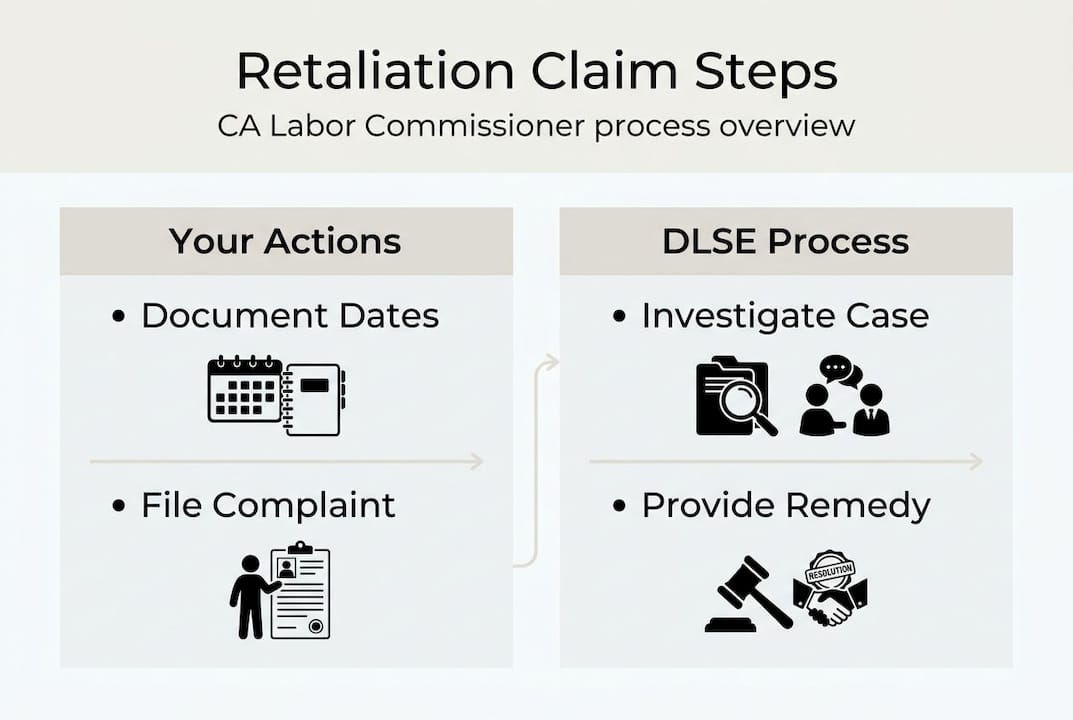
| Step | What happens | Your role |
|---|---|---|
| Complaint filed | DLSE receives and logs your case | Submit complete, accurate forms |
| Assignment | Investigator is assigned | Stay available for contact |
| Investigation | Evidence reviewed, parties interviewed | Provide documents promptly |
| Determination | DLSE issues findings | Review outcome and next steps |
| Remedy | Reinstatement, back pay, or penalties ordered | Comply or pursue further action |
For additional context on how state agencies handle workplace complaints, reviewing guidance on filing state workplace complaints can help you understand what to expect across different claim types.
Pro Tip: Save every piece of correspondence with your employer, including emails marked as routine. What looks unimportant today may become key evidence during an investigation.
What happens during a DLSE retaliation investigation
After filing, you will want to know what to expect from the investigation phase and the potential outcomes. The DLSE investigation is not a courtroom proceeding, but it is a formal process with real consequences for employers who violated the law.
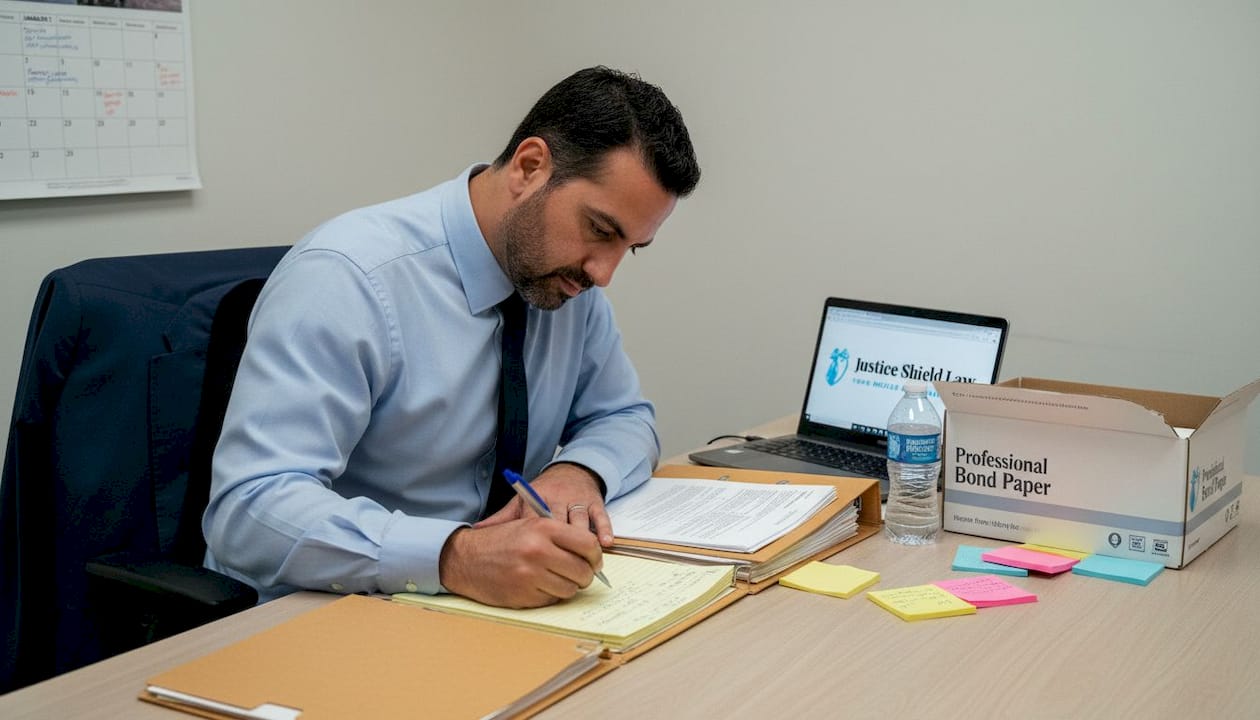
Investigators typically review your employment records, interview you and your employer, examine written communications, and assess the timeline between your protected activity and the adverse action. They look for patterns. A sudden shift in how you were treated, especially after a complaint, is exactly the kind of pattern that supports a retaliation finding.
Possible outcomes include:
- Reinstatement to your former position if you were wrongfully terminated
- Back pay for wages lost as a result of the retaliation
- Civil penalties against your employer, with penalties up to $10,000 per violation
- Referral to the Labor Commissioner's Bureau of Field Enforcement for further action
| Remedy | Available through DLSE | Available through Superior Court |
|---|---|---|
| Reinstatement | Yes | Yes |
| Back pay | Yes | Yes |
| Civil penalties | Yes | Limited |
| Emotional distress damages | No | Yes |
| Punitive damages | No | Yes |
| Attorney's fees | Sometimes | Yes |
As you can see, the DLSE offers meaningful remedies, but a Superior Court action may be appropriate if you are seeking damages beyond wages and penalties. Reviewing real retaliation claim examples can give you a clearer picture of how these cases play out in practice.
Factors that commonly cause delays in investigation timelines include:
- High caseload at the assigned DLSE office
- Employer non-cooperation or delayed document production
- Complexity of the underlying wage or safety complaint
- Multiple employees involved in the same complaint
If your situation involved termination, wrongful termination guidance can help you understand whether you may have additional claims beyond retaliation alone.
Getting support for your retaliation case
Knowing what support is available can significantly improve your chances of a positive outcome in your retaliation claim. Many employees try to navigate the process alone and find themselves overwhelmed by deadlines, documentation requirements, and employer pushback.
You have several options for support:
- An employment attorney who focuses on plaintiff-side cases can evaluate your claim, identify the strongest evidence, and represent you through the investigation or in court
- The DLSE itself provides informational resources and staff who can explain the process, though they do not represent you personally
- Worker advocacy organizations in the Inland Empire region offer guidance, referrals, and sometimes direct assistance to employees in retaliation situations
- Legal aid organizations may be available if you meet income eligibility requirements
- Online resources from the California Department of Industrial Relations cover your rights in plain language
The value of legal representation is not just about knowing the law. An experienced attorney knows how investigators think, what documentation carries weight, and when to escalate a case to court. That practical knowledge changes outcomes.
"Employees who seek legal guidance early in the process are better positioned to preserve evidence, meet deadlines, and respond effectively when employers dispute the claim."
If your retaliation is connected to a medical leave request, FMLA retaliation help addresses that specific scenario in detail. If your employer retaliated after a workers' compensation claim, guidance on denied workers' comp claims may also be relevant to your situation.
While DLSE sources confirm there is no public county-specific data on retaliation filings in San Bernardino, the absence of that data does not reflect a lack of activity. It reflects how these cases are processed and resolved, often quietly and without public record.
The truth about retaliation claims in San Bernardino County
Most guides on retaliation claims focus on the technical steps. What they skip is the reality of what pursuing one actually feels like. The process can be slow. Employers often dispute everything. And the lack of county-level statistics can make it feel like your case is invisible.
Here is what we have learned from working with employees across Southern California: the absence of public data on San Bernardino retaliation cases does not mean those cases are not being filed or resolved. It means they are handled through administrative processes that rarely generate headlines. Many cases settle before a formal determination is issued. That is not a failure of the system. It often means the system is working.
The employees who get the best outcomes are the ones who document early, act quickly, and get support before they feel desperate. Waiting to see if things improve on their own is the single most common mistake we see. Retaliation tends to escalate, not resolve itself.
Your employee protections overview under California law is genuinely strong. The key is knowing how to use those protections before the window closes.
How Justice Shield Law supports San Bernardino retaliation cases
If you are ready for experienced support, here is how Justice Shield Law can guide you. We focus exclusively on representing employees, never employers. That means every strategy we develop is designed to protect your rights and hold your employer accountable.
We work with employees throughout San Bernardino County who are dealing with retaliation after wage complaints, safety reports, discrimination claims, and more. Our team reviews your situation, explains your options clearly, and helps you understand what your case may be worth before you commit to any path forward.
Taking the first step is straightforward. You can speak with an employment attorney through a free consultation with no obligation. We are here to help you understand your rights and decide what to do next with confidence.
Frequently asked questions
What qualifies as retaliation by an employer in California?
Any negative action taken against you after you assert your legal rights, such as being fired, demoted, or having your hours cut, may count as retaliation under California law. The DLSE enforces these protections across all counties, including San Bernardino.
How do I file a retaliation claim with the Labor Commissioner?
You submit a complaint form either online, by mail, or in person at your local DLSE district office. DLSE district offices serve Southern California regions that include San Bernardino County.
What outcomes can I expect from filing a retaliation claim?
You could receive reinstatement, lost wages, and penalties against your employer. The DLSE can pursue penalties up to $10,000 per violation, depending on the circumstances of your case.
Is legal representation required to file a retaliation claim?
You are not required to have an attorney to file, but legal guidance often strengthens your case and helps you avoid common mistakes that can affect the outcome.
How long do retaliation investigations typically take?
Investigation timelines vary widely, often ranging from several months to over a year, depending on case complexity, employer cooperation, and the DLSE office's caseload.
Recommended
- Justice Shield Law | California Employment Lawyers — Free Consultation
- Justice Shield Law | California Employment Lawyers — Free Consultation
- Justice Shield Law | California Employment Lawyers — Free Consultation
- Justice Shield Law | California Employment Lawyers — Free Consultation
- Labor Law Audit Services | Compliance Experts Nestlers